
Contenimento dei PFAS: copertura in geomembrana EVOH con barriera ai gas per ridurre la contaminazione delle acque sotterranee
Project Name: Cape Cod Gateway Airport
Project Date: 2020
Project Location: Hyannis, MA
Project Market: Geosynthetic Cap
Project Scope: Supply of Absolute Barrier Y30BAC
Viaflex Material Used: Absolute Barrier Y30BAC
Background
The Airport is in Hyannis, Massachusetts, and provides scheduled airline service, general aviation services, and other aviation related activities. The Airport is owned by the Town of Barnstable and is managed through the Barnstable Municipal Airport Commission. Currently, the Airport is comprised of approximately 645 acres of land, with approximately 140 acres that are impervious (e.g., paved areas such as parking lots, runways, taxiways, aircraft parking aprons, concrete walkways, and building rooftops). The Airport’s structures include the main terminal and the Air Traffic Control Tower (“ATCT”), which are located south of the runways and taxiways, as well as several hangars used for general aviation and operations services. In addition, the current Airport Rescue and Fire Fighting/Snow Removal Equipment (ARFF/SRE) Building is in the southeast corner of the property. The Airport is situated in an area of Hyannis zoned for Business and Industrial uses.
Project Challenges
In the Commonwealth of Massachusetts, the Massachusetts Department of Environmental Protection (MassDEP) Bureau of Waste Site Cleanup was tasked with ensuring the cleanup of oil and hazardous material releases pursuant to the Massachusetts Oil and Hazardous Material Release Prevention and Response Act (M.G.L. Chapter 21E). This law was implemented through regulations known as the Massachusetts Contingency Plan (310 CMR 40.0000 et seq. – the MCP). Both M.G.L. c 21E and the MCP require response actions to provide for the protection of harm to health, safety, public welfare, and the environment which may result from releases and/or threats of releases of oil and/or hazardous material (OHM) at disposal sites.
Material Selection
Absolute Barrier Y30BAC was selected due to its flexibility and barrier properties. The flexibility of the cap membrane allow the material to lay flat and conform to soil conditions above and below the geomembrane. Additionally the barrier layer in Y30BAC has proven to be the most effective geomembrane to prevent filtration of contaminants into the soil and ultimately water table.
Soluzione del progetto
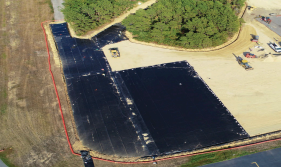
The Intermediate Response Action Modification included details for the installation of a cap in two select areas to reduce precipitation infiltration. The two areas are identified as the Deployment Area and the ARFF/SRE Building Area as indicated on Figure 2. The two capped areas total approximately 94,100 square feet and represent a majority of the known PFAS source areas at the time of the report relating to the historic use of AFFF. The caps were completed in September 2020 and are documented in the report titled “Immediate Response Action Plan Status Report 8”. The surficial extent of the two capped areas is indicated on Figure 4.
 |
 |
Conclusion
- Groundwater trend analysis shows a substantial drop in PFAS within four months of capping.
- Fluctuation of PFAS concentration in groundwater correlates well with groundwater elevation change.
- Minimal groundwater concentration rebound is occurring during each groundwater elevation rise and fall.
- The PFAS plume is expected to be below the applicable regulatory standard in six years.
